
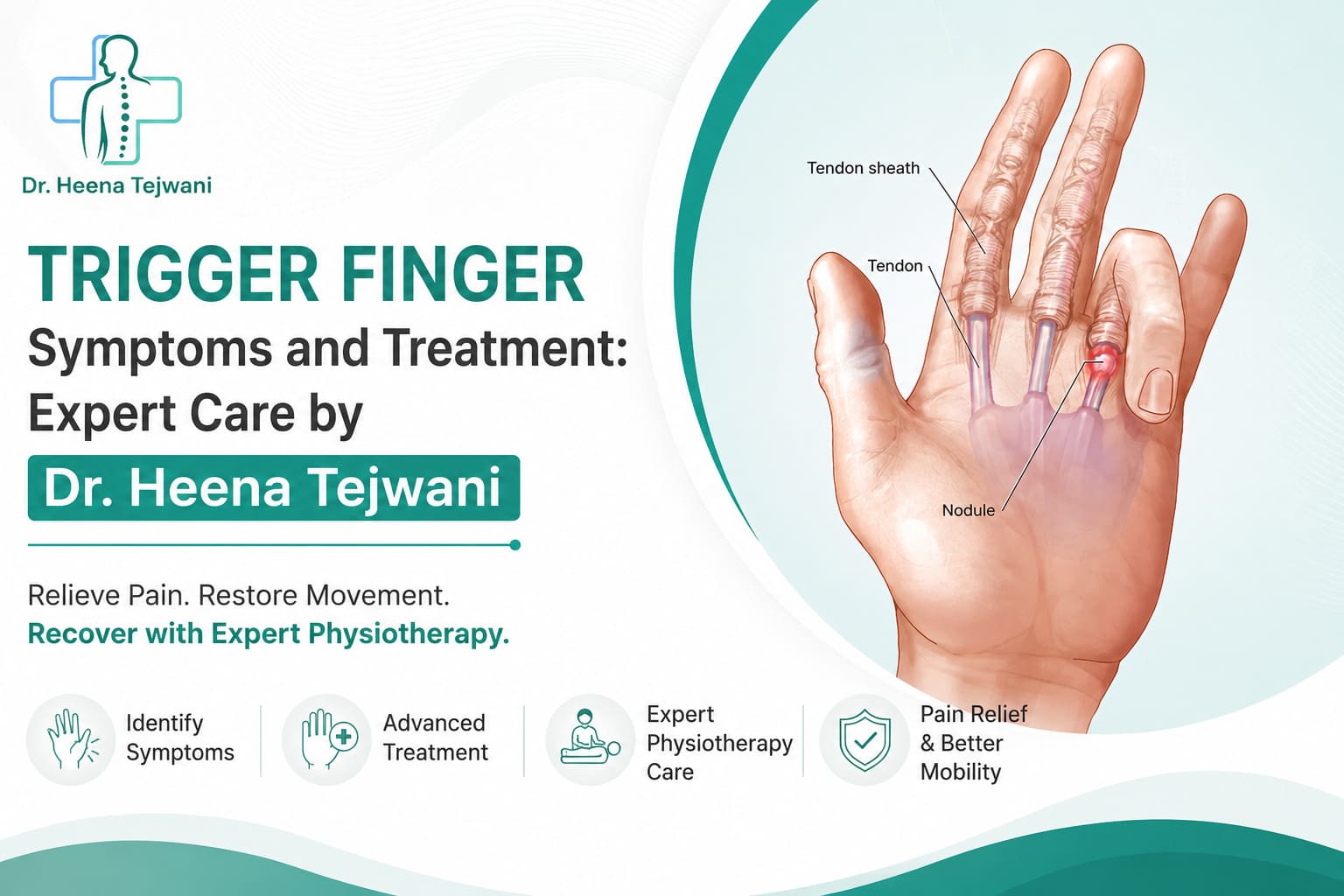
Finger stiffness that eventually snaps back straight with a painful pop could indicate that you have Trigger Finger (Stenosing Tenosynovitis). This could cause you to have significant difficulties and discomfort holding a pen, typing, or even opening a bottle.
If caught early enough, pain can subside, movement can be restored, and the condition can be contained with the right Trigger Finger treatment.
What is Trigger Finger (Stenosing Tenosynovitis)?
Trigger Finger is a tendon issue that affects your fingers and thumbs. Tendons can become irritated and inflamed, which can block their ability to move within protective sheaths and cause symptoms such as:
- Clicking or snapping when straightened
- Stiffness (Especially in the morning)
- Pain from gripping
The condition can affect any finger, but typically affects the thumb, middle finger, and ring finger.
Understanding the Symptoms of Trigger Finger
Usually the symptoms of Trigger Finger are ignored and thought symptom stiffness will go away on its own. Ignoring the symptoms of Trigger Finger will likely cause you to miss the best opportunity for the most effective treatment.
Common Signs and Symptoms
Certain symptoms of trigger finger are more noticeable when using the hand, such as the following common symptoms:
- Popping or clicking sensations
- Stiffness
- Base pain (especially of the thumb)
- Tenderness
- Finger locks in a bent position
- Difficulty with grips
Advanced Symptoms
As trigger finger becomes more advanced, the following symptoms may be present:
- Frequent locking
- Weakened grip
- Pain during normal activities
- Worsening difficulty moving the finger
What Causes Trigger Finger?
There are some common causes of trigger finger, however not much is certain regarding finding the actual cause of the condition.
Common Causes
Finger Movement Causes
Movements which cause fingers to grip or pinch repeatedly can result in the condition. Examples of these activities are:
- Typing
- Writing
- Gardening
- Using Tools
- Household Activities
- Medical Conditions
Some other conditions may also result in trigger finger, such as:
- Diabetes
- Rheumatoid Arthritis
- Hypothyroidism
- Carpal Tunnel Syndrome
Also, Age and Gender are contributive factors. The condition is more frequent in females and in those who are aged 40 - 60.
Who's Most at Risk?
Those who are most likely to develop the condition are:
- Diabetes or Arthritis.
- Frequently use phones and computers
- Those who had hand surgery
- Those who do gripping activities for work
In the cities of Ahmedabad and Gandhinagar, office workers, factory workers, homemakers, and small entrepreneurs suffer from hand strain.
Options for Treating Trigger Finger
There are many pathways to treatment, and the best option depends on how long the condition has persisted as well as the severity of the symptoms.
- Rest and Modifying Activities: Rest can reduce the ongoing irritation of the tendons, and activity modification to slow down or eliminate the repetition of the irritated action is recommended.
- Splinting: A splint can be used to hold the finger in rest to help facilitate healing.
- Medication: A physician may recommend anti-inflammatory medications to help decrease swelling and pain.
- Physiotherapy: Physiotherapy is an excellent option for many individuals and is a conservative treatment to help many people without the need for surgery.
- Injections and Surgery: For the people that physiotherapy does not help, and for the people that do not improve with other conservative treatment options, corticosteroid injections and other surgery can be used to treat the trigger finger.
How Physiotherapy Helps in the Treatment of Trigger Finger
A main focus in the literature appears to be the long-term benefit of addressing the dysfunction of the trigger finger.
Benefits of Physiotherapy
Physiotherapy, even in gentle forms, is a great way to improve the dysfunction of tendons and makes physiotherapy an even greater option without the need for surgery.
Physiotherapy Techniques
Soft Tissue Mobilisation:
Mobilisation of the soft tissue through manual therapy helps facilitate the movement of tendons.
Stretching and Strengthening:
Stretching of the tendons, and a tight tendon helps to improve the long-term healing and strengthening of the tendons even helps serve the overall function of the hand.
Ergonomic Education:
Ergonomic education can help the patient lessen and adapt their activities to better address the overall issues of strain on the hands.
Along with trigger finger treatment, Orthopedic Physiotherapy helps manage various musculoskeletal conditions affecting joints, muscles, tendons, and ligaments.
Why Treat Trigger Finger Early?
Many patients wait until they experience regular finger locking to seek treatment.
Choosing to treat trigger finger early can:
- Stop symptoms from worsening
- Shorten recovery time
- Eliminate the need for more complicated treatment
- Restore hand function sooner
Why Dr. Heena Tejwani and Her Physiotherapy Services Are Favorite Among Patients
The main factor that can lead to a more significant improvement in health when a patient is seeking physiotherapy is the experience of the physiotherapist.
Dr. Heena Tejwani, listed by many as one of the Top Physiotherapists in Ahmedabad and a renowned Top Physiotherapist in Gandhinagar, has developed many specialized physiotherapy treatment plans.
Among the numerous advantages, patients benefit from:
- Thorough evaluations
- Individual physiotherapy sessions
- Tailored exercise prescriptions
- Treatment that is focused on evidence
- Greater emphasis on long-term rehabilitation
Treatment plans are based on the patient’s occupational and recreational lifestyle as well as the presenting symptoms, versus the common practice of providing a generic exercise.
Trigger Finger Recovery
In addition to professional care, adopting some of the following behaviors can enhance recovery:
Do:
- Take breaks for long, repetitive hand tasks
- Do hand exercises
- Use tools to help your hands
- Maintain proper hand posture
- Follow your physiotherapist's advice
Don't:
- Grip things too hard
- Ignore symptoms
- Lock finger and don't seek treatment
- Do painful things that cause symptoms to worsen without modifications
When is the right time for physiotherapy?
Consider consulting a physiotherapist if:
- Finger stiffness lasts more than a few weeks
- You experience locking or clicking regularly
- Pain affects your daily activities
- Hand weakness develops
- Symptoms continue despite rest
The sooner you seek help for your hands and fingers the better the outcome and the quicker you will be able to resume normal everyday activities.
There’s no aspect of life where you don don’t use your hands in some way. From work to your daily activities, trigger finger is a condition with a long range of potential negative impacts on your life and well-being. Fortunately, not only is there effective treatment for trigger finger, but physiotherapy is a good option to help you avoid surgery.
Dr Heena Tejwani is a physiotherapist located in Ahmedabad and Gandhinagar who personally tailors treatment to help patients with trigger finger. The sooner you start treatment, the sooner you will be able to return to normal activities.
Frequently Asked Questions
- What is trigger finger?
Trigger finger is a condition where a finger locks and gets stuck because of the swelling around the tendon. - What is the best trigger finger treatment?
The best trigger finger treatment relies on the different severities and is often associated with physiotherapy, splinting, and modifying certain activities. - Can physiotherapy cure trigger finger?
In a lot of cases, physiotherapy can reduce the severity of the symptoms, restore the lost range of motion, and decrease the chances of symptoms reappearing. - How long is the recovery for trigger finger?
Recovery always varies, but trigger finger treatment for mild cases often has the symptoms subside in a matter of weeks. - Is trigger finger surgery always required?
Surgery is generally not required, and conservative trigger finger treatment and physiotherapy is effective on many patients. - Who is at a higher risk of developing trigger finger?
A higher risk of developing trigger finger is associated with the repetitive use of hands, diabetes, arthritis, and certain jobs. - When should I get trigger finger treatment?
You should get treatment when the pain, stiffness, and the locking/clicking of the fingers interferes with daily activities.
Conclusion:
Is your finger locking, stiff, and painful? Call Dr. Heena Tejwani and get evaluated. There is nothing better than returning to normal, pain-free activities!